Family Monthly Calendar 2023 Planner: Organize Your Year
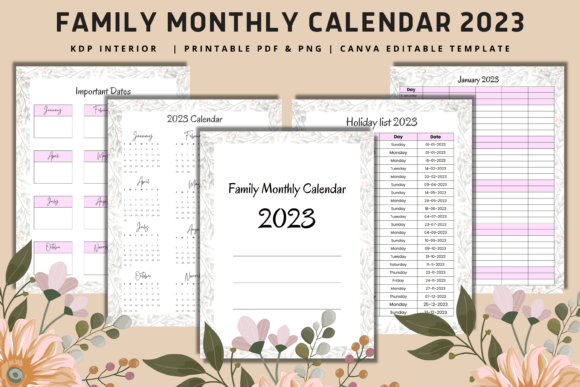
A functional calendar is the backbone of a well-run household, but it can also be a canvas for creative planning. The Family Monthly Calendar 2023 Planner moves beyond a simple grid of dates. It represents a ready-made system, a foundational template designed to be both a practical tool and a springboard for personalized projects. This planner is interesting precisely because of its dual nature: it provides the essential structure of a 2023 monthly calendar, holiday list, and key planning pages, yet it arrives as a collection of editable files—PNG, PDF, PowerPoint, and a Canva link—granting you complete ownership over its final form.
The Foundation: More Than Just Dates
At its core, the Family Monthly Calendar 2023 Planner offers the stability needed for busy lives. The included 2023 calendar, list of holidays, and important dates section provide a shared temporal framework for any family. This isn't just about noting appointments; it's about visually synchronizing lives. When everyone can see the month ahead on a single page, from school projects to dental visits to family vacations, it reduces friction and creates a collective understanding. The supplementary pages—shopping lists, notes, "This Book Belongs To"—transform it from a mere schedule into a centralized household command center.
Creative Applications Beyond the Kitchen Wall
The true potential lies in how you adapt this template. Its ready-to-upload, KDP-tested format is explicitly designed for low-content book publishing, but its applications are far wider. For creators and entrepreneurs, this planner is a starting point, not an end product. Consider using the editable Canva file to infuse it with your brand’s color palette and fonts, creating a custom planner to sell or give as a client gift. Educators might adapt the monthly pages into a classroom calendar, adding sections for curriculum milestones or student birthdays. Bloggers could use the clean layout to produce a printable themed planner—a "Gardening Monthly Calendar 2023" or "Home Renovation Tracker"—as a lead magnet for their audience.
The different file types unlock specific workflows. The PowerPoint file allows for quick, traditional slide-based editing, perfect for those comfortable with Office suites. The PNG files offer individual elements that can be imported into various design software for more intricate compositions. The provided PDF with bleed ensures professional-grade printing, whether you're producing a physical book for Amazon KDP or a high-quality booklet for local community sales.
Adapting the Template for Different Goals
Your goal dictates your adaptation. If your aim is efficiency, keep the design clean and focus on adding functional sections: a weekly meal planning block on each month page, or a dedicated column for extracurricular activities. If your goal is aesthetic appeal, use the template as a base layer. Overlay textures, incorporate subtle illustrations, or experiment with typography to create a planner that feels inspirational to use. For audience-specific projects, think about the information hierarchy. A planner aimed at freelancers might emphasize invoice due dates and project milestones over a family shopping list. One for new parents could integrate pediatric check-up trackers and growth notes.
- For the Small Business Owner: Merge the monthly calendar with business metrics. Add a bottom row to each month to track monthly sales goals, social media campaigns, or inventory deadlines. The notes pages become client meeting logs.
- For the Community Organizer: Transform it into a shared community events calendar. Use the important dates section for local festivals, and the monthly pages to coordinate volunteer schedules, all while maintaining a friendly, accessible design.
- For the Creative Hobbyist: Personalize it into a project tracker. A quilting enthusiast could note fabric purchase dates and pattern completion goals. A writer could use it to track daily word counts and submission deadlines alongside personal appointments.
Balancing Originality with Clarity
When customizing, the key is to enhance without obscuring. The primary function—clear monthly calendaring—must remain intuitive. Add your original elements in dedicated zones: a sidebar, a footer, a lightly shaded secondary column. Maintain consistent typography for dates and events to ensure readability. Use color coding strategically, perhaps assigning a color to each family member or project type, and include a simple key on the first page. This keeps the system organized and audience-friendly, whether the audience is your own family or your customer base.
Practical Steps to a Finished Product
Begin by reviewing all 18 different pages provided. Identify which are core and which you might modify or replace. Open the Canva editable link—this is often the most flexible tool for non-professional designers. Start with a single month page as your test canvas. Adjust the layout incrementally. Perhaps you want a larger notes box on the right. Move elements carefully, always checking that the date grid remains perfectly aligned. Once one month is perfected, apply those changes to the remaining months to ensure consistency, a crucial step for professional results.
Populate the "Important Dates for 2023" page with context-specific events. For a family planner, this includes anniversaries and birthdays. For a business template, it might be trade shows or tax deadlines. The shopping list and notes pages are wonderfully generic; you can rename them entirely to suit your need—"Project Supplies" and "Client Feedback," for example. Finally, use the ready-to-upload PDF 8.5 x 11 inches with bleed as your final export for printing. This tested format eliminates technical guesswork, allowing you to focus on content and design.
The Family Monthly Calendar 2023 Planner template is a pragmatic invitation. It provides the reliable structure of a 2023 annual calendar, freeing you to invest your energy into customization and application. Whether you publish it, share it, or use it privately, it serves as a reminder that organization and creativity are not opposites. They are partners in building a more coordinated and intentional year.