Mastering Project Management with an Assignment Tracker Log Book
In the relentless pace of professional and creative life, the ability to track, manage, and complete assignments efficiently is a cornerstone of success. An Assignment Tracker Log Book serves as a dedicated, systematic tool for this purpose, moving beyond scattered notes and digital reminders to provide a consolidated, physical record of work. It fits into the broader process of disciplined project management, acting as a central hub for accountability and progress monitoring. Whether you are overseeing a multi-phase marketing campaign, coordinating academic research, managing freelance deliverables, or pursuing personal learning goals, this tool transforms intention into structured action.
The Strategic Role of a Physical Log in Digital Workflows
While digital calendars and task apps offer notifications and syncing, they can contribute to cognitive overload and fragmented focus. An Assignment Tracker Log Book introduces a tactile, deliberate layer to your workflow. Its use is ideally positioned before a project commences, during its active execution, and after completion for review. Before starting, it becomes a planning instrument where you can break down overarching goals into discrete, manageable assignments, assigning deadlines and priority levels. During the work, it is your daily or weekly checkpoint, a place to log progress, note obstacles, and adjust timelines. After a project concludes, the filled log serves as a valuable archive for analyzing your efficiency, estimating future work, and identifying patterns in your productivity.
Integration with Existing Tools and Methods
The log book does not replace digital tools; it complements them. Consider a common workflow: a project manager receives briefs via email, discusses details on a collaboration platform like Slack, and stores reference documents in cloud storage. The Assignment Tracker Log Book interacts with these assets by serving as the curated summary. Critical dates from the email are transcribed. Key decisions from the chat discussions are noted. The status of document reviews is tracked. This interaction creates a single, authoritative reference point that reduces the need to constantly switch between digital windows, enhancing focus. For educators, it can track student submissions alongside gradebook software. For entrepreneurs, it can monitor product development milestones alongside financial spreadsheets. The physical log acts as the integrative thread, weaving disparate digital inputs into a coherent narrative of progress.
Practical Implementation for Diverse Users
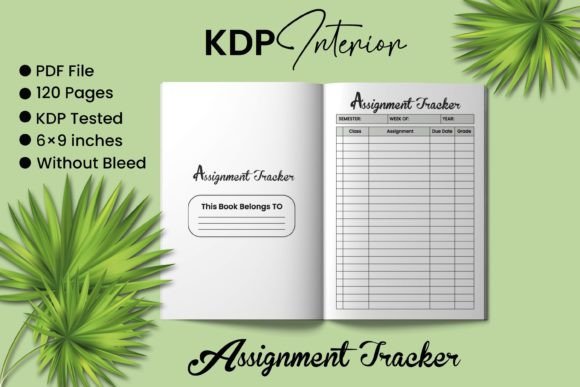
Implementing an Assignment Tracker Log Book smoothly requires a modest upfront investment in setup and habit formation. The first step is selecting a format that aligns with your volume of work. A log with 120 pages, such as the instantly downloadable KDP interior, offers ample space for sustained use across multiple projects or academic semesters. Begin by dedicating a few pages to an index or a master list of all active projects. This creates a high-level overview.
For each individual assignment, create a dedicated entry. A robust template might include:
- Assignment Title & Description: A clear, concise statement of the task.
- Project Affiliation: Linking it to the larger goal.
- Start Date & Due Date: Defining the time frame.
- Priority Status: Using a simple scale (e.g., High, Medium, Low).
- Progress Notes Section: For daily or weekly updates on completed sub-tasks, challenges encountered, and resources used.
- Final Completion Date & Outcome Notes: Closing the loop with results and reflections.
A publishing professional, for example, could use this to track manuscript edits from first draft to final proof, noting each reviewer's feedback date and the stage of revision. A freelance graphic designer might log client revision requests, tracking the number of iterations and time spent for accurate future quoting.
Ensuring Usability and Long-Term Value
The quality of the physical tool directly impacts its usability and longevity. High-resolution, clear interiors ensure that writing is easy and the pages are professional. A 6x9 inch size is portable yet provides sufficient writing space. An interior without bleed is specifically designed for Amazon KDP publishing, ensuring the final printed product looks crisp and the margins are correct, which is crucial for creators who publish such log books or for end-users who value a clean, readable layout. The inclusion of an intro page allows for personalization—you can note the year, overarching goals, or key contacts relevant to the assignments logged.
For long-term use, consistency is key. Designate a regular time—perhaps at the start of each workday or the end of each week—to update the log. This ritual not only maintains the record but also prompts a mental review of priorities. The act of physically writing progress can solidify commitment and provide a tangible sense of advancement that scrolling through a digital list often lacks. Over months and years, a series of completed log books becomes a powerful personal archive, offering insights into your evolving work patterns, capacity, and achievements.
Optimizing Workflow Efficiency and Quality Control
An Assignment Tracker Log Book is fundamentally a tool for enhancing efficiency and enforcing quality control. By requiring you to articulate an assignment in writing, it surfaces vague or poorly defined tasks early. This preparation step forces clarity, which is a major efficiency booster. During execution, the log promotes focus. Instead of wondering "what should I work on next," you consult your log, which already holds the prioritized list based on your earlier planning.
From a quality perspective, the log facilitates consistency. For team leaders or educators managing multiple people, using a standardized log format for all assignments ensures that tracking methodology is uniform, making aggregation and review straightforward. It also becomes a communication tool; a quick glance at a team member's log page can provide a status update without interrupting their flow with a meeting or message. For solo creators, it acts as a self-audit mechanism. Regularly reviewing past entries helps identify recurring bottlenecks—perhaps certain types of assignments always take longer, indicating a need for skill development or process adjustment.
Adapting the Log to Specific Scenarios
The application of an Assignment Tracker Log Book is remarkably adaptable. Consider these scenarios:
- Academic Research: A PhD student tracks literature review assignments, data collection phases, analysis milestones, and draft chapter completions, aligning each with conference submission deadlines.
- Content Marketing Campaign: A marketer logs the creation and publication schedule for blog posts, social media content, and email newsletters, noting performance metrics next to each entry for post-campaign analysis.
- Product Development: A small business owner monitors design iterations, prototype testing phases, vendor communications, and pre-launch marketing assignments.
- Personal Skill Acquisition: A hobbyist learning a new language logs weekly practice assignments, textbook chapters completed, and conversation milestones.
In each case, the core function remains: to deconstruct a complex endeavor into tracked units of work, providing visibility and control. The log book moves the management from being a reactive, stressful activity to a proactive, guided process.
Accessing a Ready-to-Use Tool for Immediate Implementation
For those ready to integrate this system, the availability of professionally designed, ready-to-upload interiors accelerates implementation. A downloadable package containing a high-resolution PDF file, JPG files for preview, and a compressed ZIP file eliminates the design overhead. The assurance that the files are tested on Amazon KDP guarantees technical compatibility and print quality, which is vital for self-publishers or for individuals seeking to print a premium personal copy. This practical accessibility means you can secure the tool and begin structuring your workflow without delay, focusing your energy on the assignments themselves rather than creating the tracking framework.
Ultimately, an Assignment Tracker Log Book is more than a notebook; it is a commitment device and a strategic map for your professional and personal endeavors. By providing a dedicated space to plan, monitor, and reflect on your work, it cultivates a discipline of execution that is essential for achieving complex goals. Its integration into your existing ecosystem of tools enhances rather than disrupts, offering a tangible anchor in an increasingly digital world. Whether you are managing a team, steering a solo venture, or pursuing academic excellence, this simple yet systematic tool can be the foundation upon which reliable, measurable progress is built.