The Essential Guide to a Gardening Expense Tracker Log Book
Gardening, whether a modest hobby or a sprawling commercial venture, is an endeavor deeply rooted in passion and patience. Yet, beneath the beauty of blooming flowers and ripening vegetables lies a complex web of inputs, investments, and financial decisions. Many gardeners find themselves wondering at the end of a season: how much did it all actually cost? The answer often remains elusive, scattered across receipts, forgotten purchases, and estimations. This is where the systematic use of a dedicated Gardening Expense Tracker Log Book transforms not only your accounting but your entire gardening strategy. Moving from informal guesswork to formal record-keeping elevates gardening from a mere pastime to a managed project with clear financial intelligence.
Why Financial Tracking is the Unseen Root of Garden Success
Consider the common gardening cycle: planning, purchasing, planting, maintaining, and harvesting. Each phase involves expenditure. Seeds, soil amendments, tools, water systems, pest controls, and perhaps even landscaping services—the costs accumulate. Without tracking, it's easy to overspend in one area, like impulse-buying specialty plants, while underinvesting in crucial infrastructure, such as quality irrigation. A Gardening Expense Tracker Log Book serves as a central repository, forcing a moment of reflection before and after every purchase. This practice reveals patterns. You might discover that your chosen organic fertilizers, while effective, are disproportionately expensive compared to other options, or that investing in perennial plants reduces annual seed costs. The log book makes the invisible visible, turning raw data into actionable insights.
Characteristics of an Effective Gardening Log Book
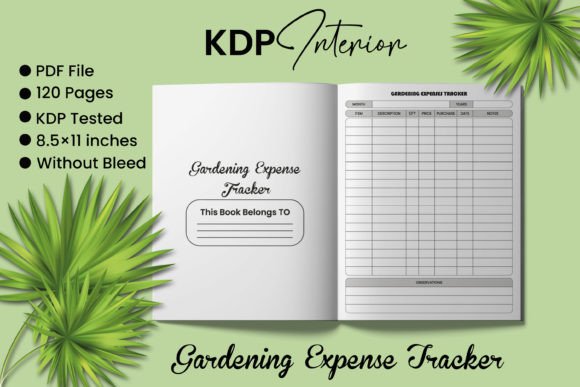
A well-designed tracker is more than a simple notebook. It is structured to capture the multidimensional nature of garden expenses. Key characteristics include categorization sections, allowing you to separate costs into logical groups like Soil & Amendments, Plants & Seeds, Tools & Equipment, Watering, and Labor. Each entry should have fields for date, item description, vendor, quantity, unit cost, and total cost. Advanced logs may include columns for projected versus actual cost, or notes on the success or failure of the investment—linking expense directly to outcome. The physical format matters too; a log book designed for outdoor use might feature weather-resistant pages or a durable cover. The interior layout should be clean, intuitive, and comprehensive without being cluttered, facilitating quick entries even with soil-stained hands.
The Practical Advantages: From Budget Control to Tax Preparation
The immediate benefit of meticulous tracking is budget control. By setting a seasonal budget and logging expenses against it, you gain real-time awareness of your financial position, preventing overshoot. This is especially valuable for community garden coordinators or small-scale market gardeners where funds are limited. Furthermore, a complete expense record is invaluable for tax purposes. For those who run even a modest gardening business, many expenses may be deductible. A detailed log provides the substantiation required for claims, transforming your hobby into a more financially efficient operation. On a personal level, the log book aids in future planning. By analyzing past seasons' data, you can create a more accurate and effective budget for the next, optimizing your spending for maximum horticultural return.
Diverse Use Cases Across the Gardening Spectrum
The utility of a Gardening Expense Tracker Log Book extends to a wide array of users. For the home hobbyist, it’s a tool for curiosity and control, answering the simple question, "How much does my garden cost?" For educators running school garden projects, it becomes an instructional tool in basic economics and project management. Researchers studying cultivation methods can use it to precisely calculate the cost efficiency of different techniques. Professional landscapers and nursery owners can integrate it into their client project management, tracking material costs for specific jobs to ensure profitability. Urban farmers and community garden administrators rely on such logs to ensure transparency and accountability for shared funds. In each case, the log book adapts to the scale and purpose, proving that financial awareness is universally beneficial.
Implementing the Tracker into Your Gardening Workflow
Adopting a new system requires integration into existing habits. The key is to make entry immediate and effortless. Keep the log book in a convenient location, perhaps with your gardening tools or near the door. Make a habit of logging purchases the same day, or immediately after a gardening session where you used supplies. For digital-minded gardeners, a printed log book can still be superior; it doesn’t require a charged device in the garden, and writing can be quicker. Designate time weekly or monthly to review the entries, tally totals per category, and assess your spending against your plan. This review phase is where insight generation happens. You might observe that pest control costs spike in July, prompting research into more preventative, cost-effective methods for the next year.
Considerations When Choosing or Creating Your Log Book
Before you begin, consider your specific needs. The scale of your garden, the complexity of your projects, and your personal organizational style all matter. Some may prefer a highly structured, pre-formatted log with every column defined. Others might want a more flexible journal with space for sketches and observational notes alongside expenses. Durability is a factor for outdoor use. Also, consider whether you need a log that tracks both expenses and harvest yields, creating a direct cost-benefit analysis. For those looking to publish or use a professionally designed tool, ready-made interiors are available. For instance, a Download exclusive Gardening Expense Tracker Log Book KDP Interior provides a polished, tested solution. Such a product typically offers a complete package: formatted for standard 8.5×11 inches, a PDF file at 300dpi for crisp printing, a JPG file for reference, an intro page, and a total of 120 pages of organized interior without BLEED, featuring high-resolution design. The files are compressed into one ZIP File, READY TO UPLOAD on Amazon KDP, having been tested to ensure quality. This option saves significant design time and ensures professional functionality.
Beyond Expenses: The Log Book as a Holistic Garden Journal
While the primary function is financial, the best log books often evolve into comprehensive garden journals. Entries about expenses naturally blend with notes on weather, planting dates, growth observations, and harvest quantities. This creates a powerful multidimensional record. You can correlate a costly investment in a new tomato variety with its eventual yield and flavor, evaluating not just cost but value. This holistic approach fosters a deeper understanding of your garden's ecosystem. It encourages you to see expenses not as isolated transactions but as investments in a living system, each with a biological and aesthetic return. The log book thus becomes a history of your garden, a narrative interwoven with data.
Real-World Observations and Long-Term Trends
Gardeners who maintain logs over multiple years unlock the ability to see long-term trends. You might notice a gradual decrease in fertilizer costs as you improve your soil health through composting, or an increase in tool costs as you upgrade to more durable professional equipment. These trends inform sustainable practices. For example, tracking water costs might lead you to invest in rainwater harvesting infrastructure—a significant upfront cost that appears in the log, but which then shows a dramatic reduction in subsequent water utility expenses. The log book provides the evidence to justify such strategic investments. It also helps in comparing different gardening methods; the cost profile of a fully organic garden versus one using conventional products becomes clear and quantifiable.
The Digital Versus Analog Balance
In an age of apps and spreadsheets, the enduring value of a physical log book is noteworthy. It offers tangibility, simplicity, and a direct connection to the physical act of gardening. There's no screen glare, no need for an internet connection in the greenhouse. However, a hybrid approach can be powerful. Use the physical book for daily entries in the garden, then periodically transfer totals or key data to a digital spreadsheet for advanced analysis and charting. The act of writing itself can be more contemplative, fostering a mindful connection to the garden's economics. Whether you choose a beautifully designed pre-made interior or craft your own, the commitment to the process is what yields the true harvest: financial clarity and horticultural mastery.
Ultimately, a Gardening Expense Tracker Log Book is a tool of empowerment. It places knowledge and control back into the gardener's hands. By understanding the full cost structure of your passion, you can make smarter choices, allocate resources more effectively, and perhaps even discover that your garden is not just a source of beauty and food, but a well-managed project that brings financial predictability alongside its natural joys. The discipline of logging, once established, becomes as habitual and rewarding as the watering and pruning itself, ensuring that every dollar spent is intentional and every investment is remembered.