The Essential Role of a Medication Planner Log Book in Modern Healthcare Management
In a world where managing personal health is becoming increasingly complex, the simple act of organizing medication information can feel overwhelming. Whether you're managing a chronic condition, tracking short-term prescriptions for yourself or a loved one, or simply aiming for better health awareness, a dedicated tool is invaluable. This is where a purpose-built Medication Planner Log Book transforms chaos into clarity, serving as a central hub for all your pharmaceutical details.
What Makes a Medication Log Book So Crucial?
Think beyond a simple notepad or a scattered collection of pharmacy receipts. A true medication planner is a structured system designed to capture, organize, and remind. Its core function is to provide a single, reliable reference point for everything related to your medications. This includes not just names and dosages, but timing, side effects, doctor instructions, and renewal dates. For individuals juggling multiple prescriptions, the risk of missing a dose, doubling up accidentally, or forgetting a crucial interaction increases dramatically. A log book acts as a personal health auditor, mitigating these risks daily.
The practical benefits are immediate and profound. It enhances adherence—the consistent taking of medication as prescribed—which is directly linked to better health outcomes. It empowers you to have more informed conversations with healthcare providers, as you can present a clear history rather than relying on memory. For caregivers, it provides a reliable way to manage the care of another person, ensuring continuity and safety. In essence, it shifts medication management from a reactive, stressful task to a proactive, controlled part of your routine.
Key Features and Functions of a High-Quality Planner
A well-designed Medication Planner Log Book isn't just blank pages; it's intelligently sectioned to guide you. Common essential features include:
- Detailed Medication Profiles: Dedicated space for each drug to record its name, purpose, dosage, frequency, prescribing doctor, and pharmacy.
- Daily/Weekly Tracking Charts: Logs to check off doses taken, creating a visual record of adherence and preventing confusion.
- Side Effect & Symptom Monitoring: Areas to note any reactions or changes in condition, which is critical data for medical reviews.
- Appointment & Refill Reminders: Sections to track upcoming doctor visits and prescription renewal dates, integrating medication management with overall healthcare scheduling.
- Emergency Contact & Information Pages: A centralized place for vital health contacts and notes, useful in urgent situations.
These functions work together to create a holistic management system. The daily tracker provides the immediate "what to do now," while the profile and monitoring sections build the long-term "what has happened" narrative. This duality is key for both daily safety and long-term health strategy.
Integrating a Medication Log into Your Daily Life and Workflow
Adopting a new tool requires it to fit seamlessly into existing habits. The best planners are designed for ease of use. They often reside in a prominent, consistent location—like beside the pill organizer or on the kitchen counter. The act of logging should be quick, taking just moments after taking a dose. This integration turns it into a habitual safeguard.
Consider a typical scenario: a person managing hypertension and cholesterol. They might take two medications in the morning and one at night. With a planner, they can quickly check the morning chart, take their pills, mark it off, and note any unusual dizziness. Weeks later, during a doctor's visit, they can show a complete history of adherence and report the episodes of dizziness with approximate dates. This concrete data leads to more precise medical adjustments than a vague "I sometimes feel dizzy."
For caregivers, the workflow is equally vital. It becomes a formal part of the care routine, a document that can be reviewed with family members or other care professionals to ensure everyone is aligned. It reduces the mental load of remembering details and provides peace of mind through verification.
Addressing Common Considerations Before Choosing a Planner
When selecting a Medication Planner Log Book, people naturally weigh several factors. The physical size and layout are primary—it needs to be portable if traveling, or large enough for easy writing if staying at home. The level of detail required is another: some need simple checkboxes, others require space for extensive notes.
The durability and quality of the interior are practical concerns. A book used daily should withstand handling, and pages should be clearly printed with readable fonts and logical layouts. Many also consider whether the design is intuitive enough for the specific user, perhaps an elderly person or a busy parent managing children's medications.
In the digital age, some might question why a physical book over an app. The answer often lies in simplicity, accessibility, and lack of technical barriers. A physical book doesn't require charging, won't crash, and can be accessed instantly by anyone without needing to unlock a device or navigate an interface. It serves as a universal, analog failsafe.
Why a Ready-to-Use KDP Interior is a Smart Solution for Creators
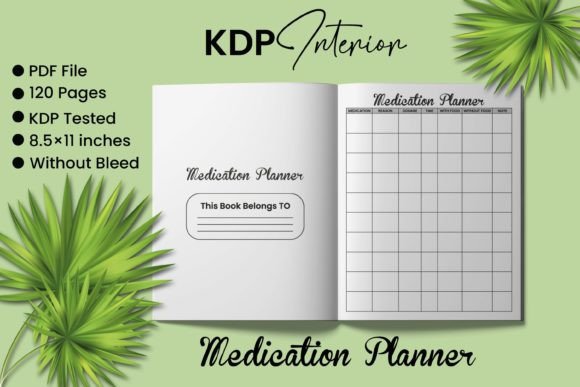
For those looking to offer a practical tool to others, perhaps through Amazon's Kindle Direct Publishing (KDP) platform, the quality of the product is paramount. A professional, tested interior design removes the guesswork and technical hurdles. The mention of an instant download for an exclusive Medication Planner Log Book KDP Interior highlights a streamlined path to creating a valuable product.
Such a ready-made interior typically includes specifications crucial for a professional finish:
- 8.5x11 Inches: A standard, full-size format that provides ample space for clear layouts and comfortable writing.
- High-Resolution 300 DPI PDF & JPG Files: Ensuring crisp, sharp printing with no blurred text or graphics, which is essential for usability.
- Structured Interior with Intro Page and 120 Pages: A complete, substantial book length that covers extended use (several months or a year) without being bulky. The inclusion of an introduction page guides the user immediately.
- Interior Without Bleed & Tested on KDP: Technical specifications that mean the files are pre-validated for the KDP upload process, ensuring they meet platform guidelines and will print correctly. The "no bleed" specification is important for interior pages where full-edge color isn't required, simplifying the design.
- Compressed ZIP File: All files delivered in one package, organized and ready to upload, saving time and preventing errors.
This approach allows a creator or entrepreneur to focus on marketing and distribution, trusting that the core product—the Medication Planner Log Book interior itself—is functionally excellent and technically sound. It meets a real user need with a professionally presented solution.
The Broader Impact: From Personal Tool to Community Resource
The utility of a medication log book extends beyond the individual. In family settings, it becomes a shared document that improves communication. In senior care facilities or assisted living, a standardized log can improve the coordination between staff and residents. Even in general practice, doctors might recommend such a planner to patients as a foundational tool for better self-management.
By providing a structured format, it also educates the user on what information is important to track. It reinforces the concepts of dosage, timing, and observation. In this way, a Medication Planner Log Book is more than a record; it's an educational instrument that promotes better health literacy and personal responsibility.
Ultimately, whether you are a user seeking to gain control over your health regimen, or a creator aiming to publish a useful resource for others, the value lies in the meticulous design and practical application. A well-crafted planner bridges the gap between medical instruction and daily life execution, turning prescription into practice, and anxiety into assurance. It’s a simple concept, but in the detailed execution—the clear sections, the high-resolution pages, the tested formatting—it becomes an indispensable tool for navigating modern healthcare.