The Social Media Post Planner Log Book: Structuring Your Online Voice
For professionals, creators, and business owners, social media isn't just an outlet—it's a critical channel for communication, marketing, and community building. However, the constant demand for fresh, engaging content can quickly lead to chaos. Ideas scatter across notes apps, deadlines loom, and consistency falters. This is where a dedicated Social Media Post Planner Log Book transitions from being a simple notebook to a central command center for your digital strategy. It provides a tangible, structured space to move from random posting to intentional publishing.
Beyond the Digital Dashboard: The Role of a Physical Planner
While numerous digital tools and apps promise to streamline social media management, they often compartmentalize tasks. A Social Media Post Planner Log Book serves a different, complementary purpose. It exists outside the algorithmic noise of the platforms themselves. This log book is where strategic thinking happens before any content touches the internet. It's a place for brainstorming campaign themes, sketching visual concepts, drafting copy variations, and logging performance metrics in a unified, linear format. This pre-digital workflow ensures that your online execution is driven by a plan, not by impulse or last-minute pressure.
Integrating the Planner into Your Creative and Business Workflow
The effectiveness of a Social Media Post Planner Log Book hinges on its integration into your existing routine. For a small business owner, it might sit alongside inventory sheets and financial ledgers. A freelance content creator might use it in tandem with their project management software. The log book acts as the creative and strategic precursor to the digital tools you eventually use.
Consider a typical workflow: A monthly marketing theme is decided in a business meeting. This theme is then broken down into weekly post clusters within the Social Media Post Planner Log Book. Here, you draft post copy, note required hashtags, and jot down ideas for graphics or videos. You can also schedule tentative posting dates. This consolidated plan then informs the actual content creation—the photos you shoot, the graphics a designer produces, the videos you edit. Finally, you use a scheduling app or platform native tool to publish, often referencing the log book to ensure the planned message is adhered to. After posting, the log book becomes a record: you can note engagement data, comments that require follow-up, and insights for future content.
Practical Implementation: Making the Log Book Work for You
Avoid treating the planner as a pristine document. Its value comes from active, regular use. Start by dedicating time each week—perhaps during your Monday planning session—to review past performance and map out the coming week's content. Use it to capture spontaneous ideas whenever they strike, preventing good concepts from being forgotten. For teams, a single log book can serve as a shared reference point, ensuring everyone from the copywriter to the community manager is aligned on the campaign's voice and goals.
Customization is key. Your Social Media Post Planner Log Book should reflect your specific needs. You might create sections for different platforms (Instagram, LinkedIn, Twitter), as each requires a tailored tone and format. Other useful sections could include:
- A calendar view for high-level monthly and quarterly campaign planning.
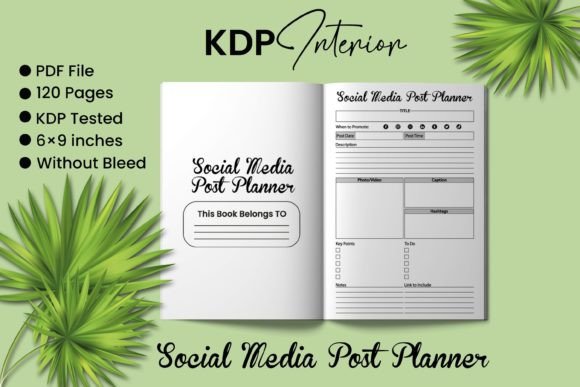
- Detailed page spreads for daily or weekly post planning, with fields for copy, visual notes, links, and hashtags.
- A performance tracking area to log metrics like engagement rates, follower growth, and link clicks.
- A content bank for recurring post ideas, user-generated content highlights, or evergreen topics.
- A competitor or inspiration watchlist to note trends and effective strategies observed elsewhere.
Ensuring Consistency and Quality Control
One of the most significant benefits of a structured planner is the enforcement of consistency. Brand voice, posting frequency, and visual aesthetic can drift over time without a central reference. The Social Media Post Planner Log Book acts as a quality control checkpoint. By reviewing your planned content in one place, you can easily spot if your tone has become inconsistent or if you're overusing certain types of posts. It also helps balance your content mix—ensuring you have a healthy ratio of promotional posts, educational content, community engagement, and entertainment.
For long-term use, the log book becomes an invaluable archive. Reviewing past volumes provides a clear history of what strategies worked, what campaigns drove results, and how your audience's interests evolved. This historical data is far more insightful than fragmented digital reports and informs smarter future planning. It turns reactive social media management into a proactive, strategic practice.
From Planning to Publication: The Execution Bridge
The final stage of the workflow is the transition from plan to published post. A well-designed Social Media Post Planner Log Book facilitates this. With all details drafted, you or your team can execute creation tasks efficiently. The photographer knows the shot list, the graphic designer has the theme, and the copywriter has the approved text. This reduces back-and-forth communication and revisions. Furthermore, having a clear plan mitigates the "blank page" anxiety that often stalls content creation. You're not starting from zero each day; you're executing a pre-approved idea.
For individuals managing multiple roles, this efficiency is crucial. The planner consolidates tasks that might otherwise be scattered across a to-do list, a notes app, and a calendar. It provides a single, focused context for your social media work, saving cognitive load and time.
Accessing a Ready-to-Use Social Media Post Planner Log Book
For those ready to implement this structured approach, a professionally designed interior template can accelerate the process. A downloadable Social Media Post Planner Log Book KDP Interior provides an instant, organized foundation. Such a template typically includes:
- A clean, minimal design that prioritizes functionality over distraction.
- Logical sections and page layouts for calendar views, daily planning, and performance tracking.
- Formatted at 8.5×11 inches, a standard and practical size for printing or digital use.
- Provided as a high-resolution 300dpi PDF file, ensuring crisp print quality if you choose to produce a physical book.
- Complementary JPG files for easy visual reference.
- A complete 120-page interior, offering ample space for long-term planning without overwhelming bulk.
This type of resource is designed for direct application. The files are compressed into one ZIP file and are tested for compatibility, making them ready to upload if you choose to publish through platforms like Amazon KDP, or simply print and use personally. By starting with a tested, structured template, you bypass the time-consuming phase of designing your own layouts and can immediately integrate the planning system into your workflow. The focus shifts from creating the tool to using the tool for its intended purpose: building a more effective, consistent, and manageable social media presence.