The Strategic Value of a Work Log Book
In the relentless pursuit of professional and personal goals, from scaling a business to mastering a creative craft, we often focus on the inputs—the tasks, the hours, the effort. Yet, the true catalyst for meaningful progress is often found in the output of our actions: the data of our own experience. A Work Log Book transforms that ephemeral data into a structured, tangible asset. It is not merely a diary of what you did; it is a dedicated space for capturing the context, the outcomes, the insights, and the deviations that occur during your work. For entrepreneurs, freelancers, creators, and any professional committed to deliberate growth, this practice becomes a cornerstone of strategic decision-making.
Beyond Time Tracking: Capturing Context and Outcome
Traditional productivity tools often measure volume—hours logged, tasks completed. A thoughtfully used Work Log Book shifts the focus to quality and causation. It asks not just "What did I do?" but "What happened as a result?" and "Why did that happen?". This simple shift unlocks profound strategic value. By recording not only the activity but the surrounding conditions—your energy level, the unexpected interruptions, the client's reaction, the tool that failed—you build a rich repository of operational intelligence.
For example, a marketer might log a campaign launch not just as a completed task, but note the specific messaging that triggered the highest engagement, the time of day that yielded the best open rates, and the internal team communication hurdle that delayed the process. This transforms a single project from a forgotten event into a case study, providing evidence for future planning. Over weeks and months, these entries allow you to identify patterns, correlations, and root causes that are invisible in a simple task list.
Intentional Use Cases for Systematic Advantage
The utility of a Work Log Book expands across domains. Its application is defined by your intention.
- For Project & Client Management: Beyond tracking deadlines, log client communications, scope changes, and your own estimations versus actual effort. This creates a factual basis for improving proposals, setting boundaries, and justifying value.
- For Creative Process & Innovation: Creatives and developers can log the genesis of ideas, the iterations of a design, and the moments of breakthrough or blockage. This chronicles your creative logic, helping you replicate successful thinking patterns and avoid unproductive ones.
- For Operational Efficiency: Small business owners can document daily operations, supplier interactions, and customer feedback in real-time. This ground-level data is crucial for streamlining processes, training staff, and enhancing the customer experience.
- For Skill Development & Learning: Professionals aiming to upskill can log their practice sessions, challenges encountered, and resources used. This turns learning into a managed project with measurable progress and identifiable knowledge gaps.
The common thread is the conversion of subjective experience into objective, reviewable information. It serves as your personal management information system.
Approaching Your Log: Strategy Before Habit
To avoid the common pitfall of creating another meaningless ritual, your Work Log Book must be guided by clear strategic intent. Begin by asking: "What specific decisions do I want to make better?" Your log's structure should then flow from that answer.
- Define Your Primary Focus: Is it to improve client project profitability? To increase creative output quality? To reduce operational bottlenecks? Your focus determines what you consistently record.
- Establish Simple, Consistent Categories: These might be "Activity," "Observed Outcome," "Key Learning," and "Action for Next Time." Consistency enables pattern recognition over time.
- Schedule Review Cycles: The log's power is unlocked in review. Commit to a weekly or monthly session where you analyze entries not as isolated events, but as a dataset. Look for trends, successes to systematize, and failures to diagnose.
- Integrate with Planning: Use the insights from your review to directly inform your next planning cycle. The log becomes the feedback loop that closes the gap between planning and execution.
This approach ensures the log is a living tool for strategic refinement, not a passive archive.
The Risks of Uncontextualized Logging
Without this strategic frame, a Work Log Book can become an exercise in futility or even a source of misdirection. The primary risk is data without insight—pages filled with activities but no analysis of their value or consequence. This can lead to a false sense of productivity based on volume alone.
Another risk is confirmation bias. If you log only successes or only failures, you create a skewed dataset that supports poor decisions. A disciplined log must capture the full spectrum, including mundane tasks and ambiguous outcomes. Furthermore, spending excessive time crafting elaborate entries can itself become a productivity drain. The goal is concise, factual recording that serves later review, not immediate perfection.
The tool is only as effective as the thinking applied to it. It requires the discipline to record honestly and the courage to review critically.
From Entries to Strategy: A Practical Example
Consider a freelance graphic designer. A generic log might state: "Day 1: Worked on logo for Client A." A strategic entry, focused on improving client satisfaction and project efficiency, would read:
- Activity: Presented three initial logo concepts to Client A via video call.
- Observed Outcome: Client immediately gravitated to Concept B, citing its alignment with their brand ethos. Concepts A and C were dismissed quickly. Call lasted 30 minutes.
- Key Learning: The preliminary questionnaire about "brand ethos" I sent was critical. For future projects, I should invest more time in that questionnaire to increase first-presentation success rate.
- Action for Next Time: Revise and expand client onboarding questionnaire before starting design work.
This single entry now directly informs a business process improvement. Over several projects, the log could reveal that certain types of clients respond better to different presentation styles, allowing the designer to tailor their approach strategically, enhancing communication and results.
The Long-Term Value: Building Your Institutional Knowledge
The ultimate return on the disciplined use of a Work Log Book is the accumulation of what organizations call "institutional knowledge." For an individual or a small team, this is your proprietary playbook. It documents what works for you, in your specific context, with your unique strengths and constraints.
This knowledge becomes a competitive advantage. It allows you to: Make forecasting decisions based on your own historical data. Train others or delegate work with clear, documented procedures and rationale. Position your services or brand based on proven outcomes you can articulate. Innovate systematically by understanding the conditions that foster your best ideas.
It turns reactive work into proactive practice. You begin to operate not from guesswork, but from a growing corpus of evidence about your own performance.
A Ready-to-Use Tool for Immediate Implementation
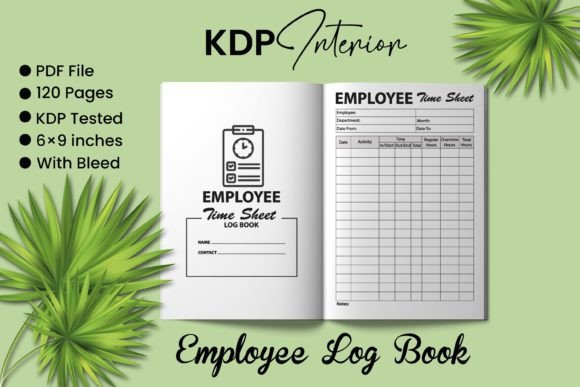
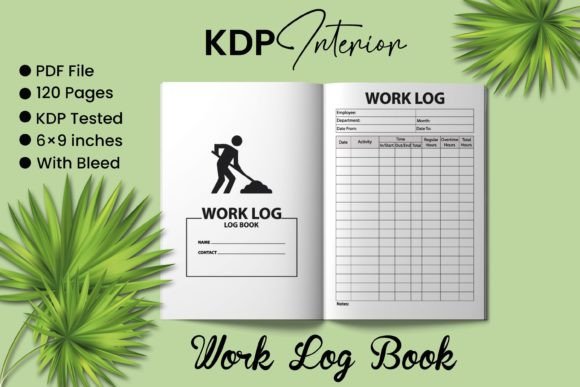
To embark on this practice without the friction of design and formatting, a professionally prepared tool can accelerate your start. Our exclusive Work Log Book KDP Interior provides a structured, high-quality foundation. It is a PDF file at 300dpi featuring a clean 6×9 inches layout, an introductory page, and a total of 120 pages to support long-term use. The interior is prepared with BLEED and is high-resolution, ensuring professional print quality. The files have been tested on Amazon KDP for compatibility and are compressed into one ZIP File, making it READY TO UPLOAD or use directly for your personal printing. This allows you to focus immediately on the strategic practice of logging, rather than the mechanics of creating the log itself.
Whether you choose to adopt a prepared interior or craft your own, the principle remains: your work generates data. Capturing and analyzing that data through a Work Log Book is a deliberate strategy to convert experience into expertise, and effort into evolved results. It is a quiet commitment to learning from your own actions, ensuring that today's work informs and improves tomorrow's decisions.