The Essential Mileage Log Book: A Foundational Tool for Tracking, Reporting, and Profitability
In the world of business, freelancing, and personal finance, meticulous record-keeping is not just a best practice; it is often the bedrock of compliance, reimbursement, and tax savings. One of the most fundamental yet powerful tools in this arena is the mileage log book. For drivers tracking business travel, medical appointments, charitable work, or moving expenses, a well-maintained mileage log is indispensable. It transforms vague recollections of travel into verifiable, authoritative data. This article explores the significance of the mileage log book, its practical applications, and how a ready-to-use paper sheet template, such as a high-quality PDF designed for print-on-demand publishing, can save time, ensure accuracy, and support entrepreneurial ventures.
The Purpose and Significance of Tracking Mileage
At its core, a mileage log book serves as a chronological record of vehicle journeys. Its primary purpose is documentation. Why does this simple act of documentation hold such weight? For businesses and self-employed individuals, vehicle mileage can represent a significant deductible expense. Tax authorities, like the IRS in the United States, require substantiation for deductions. A contemporaneous log—one filled out at the time of travel—is the gold standard for proof. It can protect against audits and maximize legitimate deductions.
Beyond taxes, mileage logs are crucial for employee reimbursements, client billing for travel time, monitoring vehicle maintenance schedules based on distance driven, and even calculating the environmental impact of travel. In essence, it converts the subjective experience of “driving a lot” into objective, actionable numbers.
Common Misunderstandings About Mileage Logs
A prevalent assumption is that a few notes on a calendar or sporadic GPS history are sufficient for official purposes. This is a risky misunderstanding. Official guidelines typically demand detailed records including: the date of each trip, the starting and ending locations, the purpose of the journey, and the total miles driven. A dedicated log book format ensures all these elements are captured consistently. Another misconception is that digital apps entirely replace paper. While apps are excellent, many professionals prefer a physical log for its simplicity, immediacy (no need to open an app), and unfailing reliability—it never loses battery power or requires a data connection. A paper log and a digital tool can also work in tandem, providing a robust backup system.
The Modern Mileage Log Book: Design and Practicality
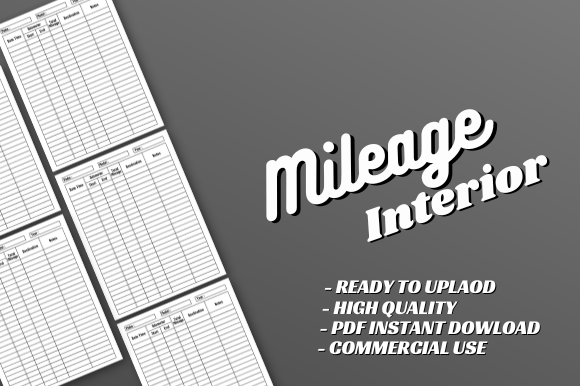
Today, a well-designed mileage log book balances functionality with user-friendliness. It is not merely a grid of blank lines; it is a structured template that guides the user to enter correct information efficiently. This is where specialized templates, like the Mileage LogBook Paper Sheets Template prepared as a PDF for KDP, come into play. Such a template is engineered for practical relevance in modern work life.
Key Features of a Ready-to-Use Template
A professional template anticipates the user’s needs. It includes:
- Clear Headings for Each Column: Date, Start Location, End Location, Purpose, Miles/kilometers.
- Dedicated Space for Trip Details: This prevents cramped, illegible notes.
- Summary Sections: Weekly or monthly totals are crucial for quick reviews and reporting.
- High-Quality Print-Ready Design: With clean lines, proper bleed areas (ensuring no misalignment during printing), and high-resolution graphics, the final printed product is crisp and professional.
Having a ready-to-upload PDF file means the template is not a rough sketch; it is a complete interior product, tested for platforms like Kindle Direct Publishing (KDP). This allows entrepreneurs, bookkeepers, or small business owners to instantly access a tool that is formatted to industry standards without any design work.
How a KDP-Ready Log Book Fits into Business and Daily Activities
The existence of a complete, tested interior file speaks directly to the entrepreneurial and DIY ethos of modern business. Print-on-demand (POD) platforms like KDP have democratized publishing. One can now create and sell physical products without inventory risks or large upfront costs. A mileage log book template is a perfect candidate for this model.
For the POD Entrepreneur
An entrepreneur looking to start a POD business saves tremendous time and money by acquiring a KDP-tested interior. The specification—8.5x11 inches, 120 pages, high-quality PDF with bleed design—means the file meets KDP’s technical requirements. The entrepreneur can then focus on marketing, cover design (as noted, the interior is separate), and business strategy, rather than wrestling with graphic design software. This empowers individuals to enter the market with a professional, useful product quickly.
For the End User: The Driver and Record-Keeper
For the person who purchases the final printed log book, the benefits are rooted in daily activity. Imagine a real estate agent driving between properties. At the end of a long day, filling out a digital form can feel like another digital chore. A physical log book on the passenger seat, however, is a quick, tactile task. The structured template ensures they don’t forget to note the purpose of the trip—a critical detail for tax differentiation between business and personal miles. The 120-page volume provides a full year or more of logging, creating a single, cohesive record for annual tax preparation.
Building a Broader Understanding: The Log Book as a System
Viewing the mileage log book not just as a product, but as a system for financial and operational clarity, expands its value. It fits into a broader ecosystem of personal organization and business intelligence.
- Data Collection: The template is the standardized tool for gathering raw data.
- Data Processing: Monthly summaries turn raw data into insights—perhaps revealing unusually high mileage in a particular month, prompting a review of routes or scheduling.
- Data Utilization: The finalized log is submitted for reimbursement, provided to an accountant, or used to claim a tax deduction, directly converting the system’s output into financial benefit.
This system is reliable. Using a tested, print-ready PDF as its foundation guarantees that the collection tool itself is not flawed. The 100 check quality on KDP assurance means the pages are correctly numbered, margins are safe, and the print will be clear—basic things that, if wrong, would undermine the entire system’s credibility.
Examples in Context
Consider a small craft business owner who drives to suppliers, craft fairs, and to deliver large orders. Their vehicle is a key business asset. A dedicated mileage log, created from a professional template, allows them to confidently separate business and personal use. At year’s end, they can calculate a precise deduction, potentially saving hundreds of dollars. Another example is a volunteer who uses their car for a non-profit. A log book provides the organization with accurate records for their own reporting and might help the volunteer claim certain allowable expenses.
Conclusion: The Tangible Advantage of a Ready Foundation
The act of tracking mileage is a universal need for many drivers. The tool used to track it should not be an afterthought. A purpose-built mileage log book template, especially one offered as a complete, ready-to-upload PDF interior, provides a tangible advantage. It eliminates design uncertainty, ensures professional presentation, and supports both the entrepreneur selling the log and the ultimate user filling it out. It embodies the helpful content principle: solving a real problem with a clear, usable solution. By providing structure to an essential daily task, it turns routine travel into organized, defensible, and financially beneficial data. In business, freelancing, and personal finance, such tools are not just convenient; they are foundational to accuracy, compliance, and smart financial management.